
The Attack on Human Reality
Cognitive hacking is the deliberate manipulation of human thought. It targets perception, memory, judgment, and decision-making by using digital channels like
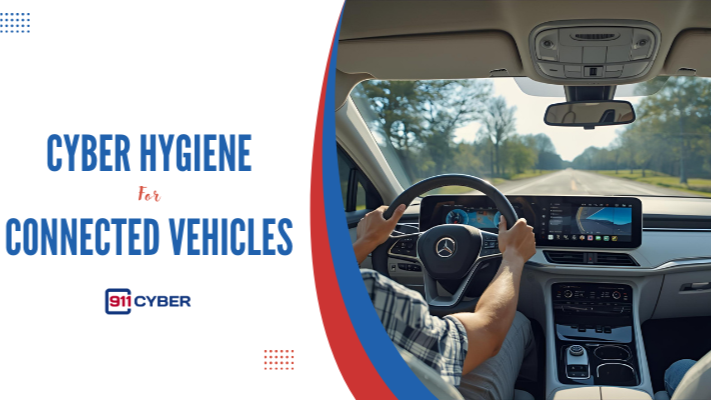
A connected vehicle is any car or truck equipped with its own internet access and wireless local area network (WLAN). This connectivity allows the car to share data with other devices both inside and outside the vehicle. Think of it as a smartphone on wheels. This includes features like:
🎶 Infotainment Systems
Streaming music, making hands-free calls, and using navigation apps that receive real-time traffic updates.
📡 Telematics
Systems that automatically call emergency services after a crash, track the vehicle’s location if stolen, or send vehicle health reports to the manufacturer.
🚦 Vehicle-to-Everything (V2X) Communication
The ability for a car to communicate with other vehicles (V2V), infrastructure like traffic lights (V2I), and pedestrians (V2P) to improve safety and traffic flow.
📱 Remote Services
Using a smartphone app to remotely lock/unlock, start, or locate your car.
As vehicles become more connected, they also become more vulnerable to cyberattacks. The stakes are incredibly high. A compromised laptop might lead to data loss or financial theft, but a compromised vehicle could lead to physical harm.
An attacker could potentially interfere with a vehicle’s critical systems, such as its brakes, steering, or engine, creating a life-threatening situation. Beyond direct safety concerns, a breach could expose sensitive personal data, including your location history, contacts, and even private conversations held inside the car.
The threat isn’t just theoretical. The data shows a clear and growing risk landscape.

Connected vehicles bring convenience and innovation, but they also open the door to a range of cybersecurity threats. Understanding the types of risks these smart cars face is the first step to keeping yourself and your data safe.
🚗 Direct Vehicle Hacking
Gaining unauthorized remote access to the car’s internal network (the CAN bus) to manipulate its functions. This is the most dangerous type of attack.
🔐 Data and Privacy Breaches
Intercepting unencrypted data sent to and from the vehicle to steal personal information. This can include GPS logs revealing your daily routines, phone contacts, and login credentials for connected apps.
🌐 Attacks on Supporting Infrastructure
Targeting the manufacturer’s servers or third-party service providers. A successful breach here could affect an entire fleet of vehicles, potentially disabling them or stealing data from thousands of owners.
📱 Malicious Smartphone Apps
Your phone is a key to your car’s digital kingdom. A malicious app on your phone could steal the credentials for your car’s remote services app, giving an attacker full access.
⚡ Compromised Charging Stations
For electric vehicles (EVs), attackers can compromise public charging stations to install malware onto the vehicle’s system or skim payment information.

Artificial intelligence is a double-edged sword. While it’s used to develop smarter vehicle safety systems, attackers are also leveraging AI to create more sophisticated threats:
🤖 AI-Powered Fuzzing
Attackers can use AI to automatically and intelligently search for vulnerabilities in a vehicle’s software far more quickly and effectively than human researchers.
📧 Advanced Phishing and Social Engineering
AI can be used to craft highly convincing phishing emails or text messages targeting vehicle owners, tricking them into revealing credentials or installing malware on their phones.
🚦 Mimicking V2X Signals
AI algorithms could be used to generate fake V2X messages, potentially causing a vehicle to react to a non-existent threat (like a phantom car braking ahead) or ignore a real one.
The future of automotive security standards is moving towards a proactive, globally harmonized, and lifecycle-based approach. As vehicles become increasingly connected and autonomous, future regulations will mandate a “security-by-design” philosophy, making cybersecurity a non-negotiable component from the initial concept to decommissioning, much like physical safety is today.
Expect to see stringent requirements for secure over-the-air (OTA) updates, robust intrusion detection systems powered by AI to monitor for threats in real-time, and rigorous supply chain security, requiring manufacturers to verify the integrity of all third-party software and hardware.
Furthermore, standards will heavily focus on securing Vehicle-to-Everything (V2X) communication to protect against large-scale attacks and will incorporate strict data privacy rules to safeguard the vast amounts of personal information modern cars collect.
📚Books
🎙️ Podcasts
▶️ Videos
Connected vehicles are one of the most exciting innovations in modern transportation, bringing convenience, safety, and efficiency to the road. But with every new layer of connectivity comes an equally significant layer of risk. A hacked car is not just a privacy concern, it is a safety concern that could impact lives.
The statistics show a clear pattern: attacks are rising, most of them happen remotely, and APIs and supporting infrastructure remain top targets. At the same time, AI is amplifying the threat by giving attackers smarter, faster, and more scalable tools.
For drivers, the takeaway is simple. Treat your connected car the same way you treat your smartphone or laptop. Keep it updated, secure your accounts, and stay mindful of how much data you are sharing. For manufacturers and regulators, it is a call to embed cybersecurity into every layer of the automotive ecosystem, from design and testing to maintenance and consumer education.
The connected vehicle revolution is here to stay. The challenge is ensuring that innovation moves hand in hand with security so we can all enjoy the benefits of smarter mobility without compromising safety.

Copyright © 2025 @ 911Cyber All Rights Reserved.

A free 15-min cybersecurity consultation